
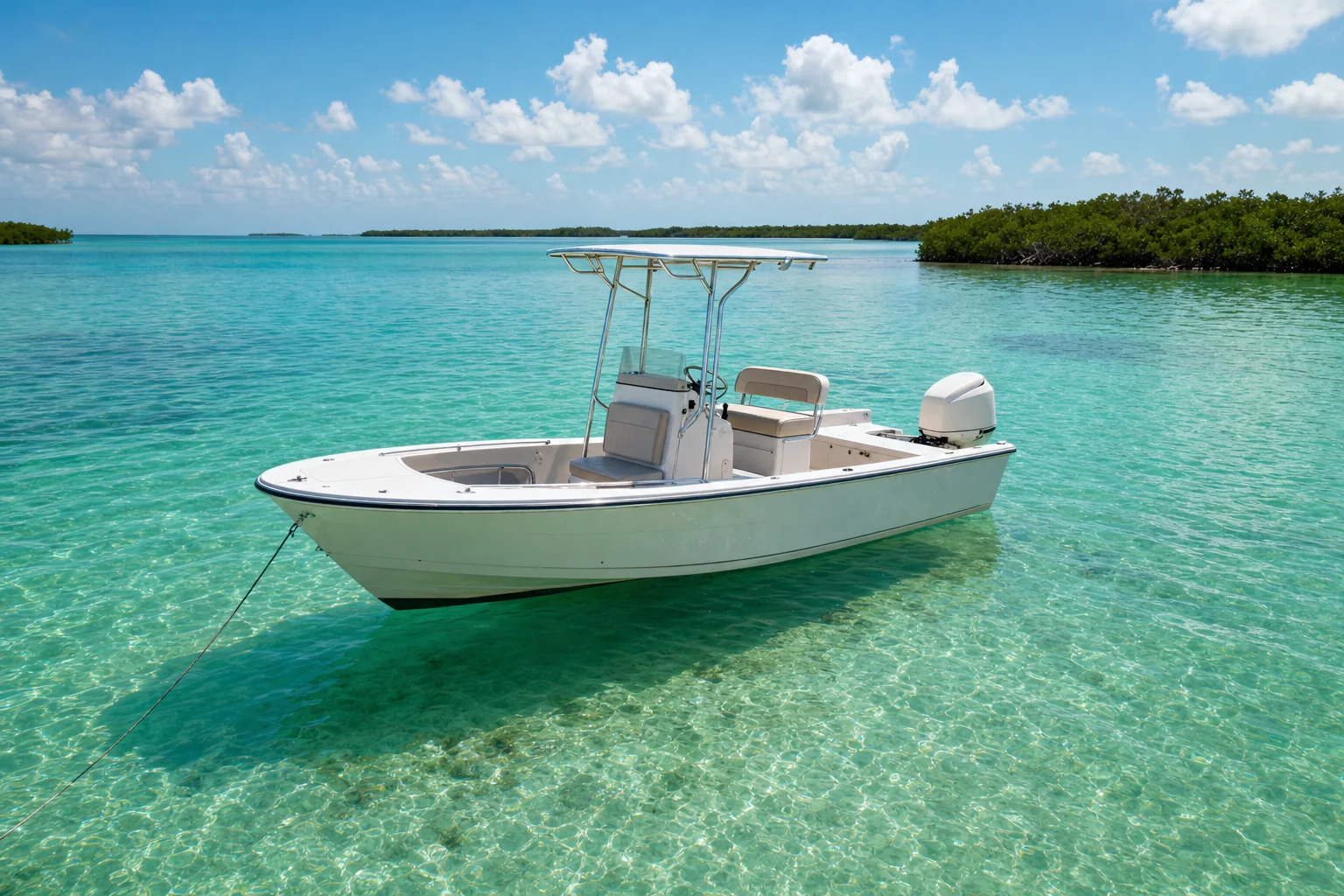
Transom Repair Key West, FL
Transom repair is one of the most critical fixes a boat owner can make, because a soft or delaminated transom puts the engine, the hull, and everyone aboard at risk. If you have noticed flex near the outboard mount, water weeping from the stern, or a spongy feel when you press on the transom face, the damage is almost certainly worse below the surface than it looks. Our mobile boat repair crew comes to your slip, marina, or driveway anywhere in Key West and handles the full repair on-site. Learn more about Fiberglass Repair.
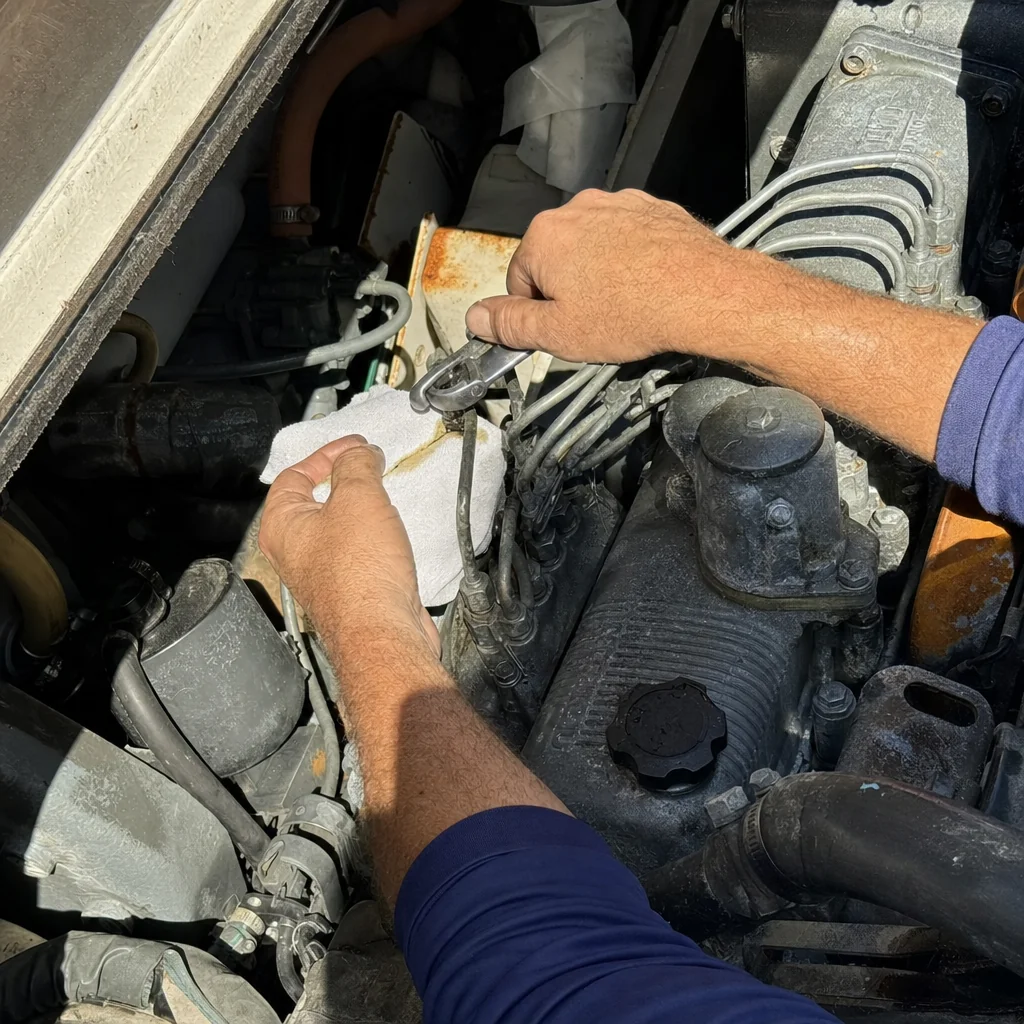
Why Transoms Fail in the Florida Keys
Salt water, intense UV exposure, and the constant vibration of outboard engines are a punishing combination for a fiberglass transom. Most transoms are built with a plywood or composite core sandwiched between fiberglass skins, and once water finds a path through a crack, a loose engine bolt hole, or a poorly sealed fitting, that core begins to rot or delaminate from the inside out. By the time the outer skin looks bad, the structural core is often already compromised across a wide area. In Key West, where boats run hard and sit in the water year-round, we see this progression faster than almost anywhere else.
What the Repair Process Actually Involves
A proper transom repair starts with a thorough moisture survey using a calibrated meter to map exactly how far the saturation has spread. We then remove the engine and any hardware mounted to the transom so nothing is in the way and no fittings are damaged during the work. Depending on the extent of the damage, we either cut an access panel from the interior of the boat or remove the outer fiberglass skin to expose the core directly.
The rotted or delaminated core material is fully excavated and the cavity is dried before any new material goes in. We replace the core with marine-grade composite board or high-density foam depending on the application, then laminate new fiberglass layers on both sides to restore the original thickness and strength. All hardware holes are re-drilled, sleeved, and sealed so water cannot re-enter the same way. The finished surface is faired, primed, and gelcoated to match the surrounding hull.
- Moisture mapping before any cutting begins
- Full engine and hardware removal for clean access
- Core replacement with marine-grade composite or foam
- Multi-layer fiberglass lamination on both faces
- Sealed and sleeved hardware penetrations
- Gelcoat finish matched to existing hull color
Signs Your Transom Needs Attention Now
Any one of these warning signs is reason enough to schedule an inspection before the damage spreads further.
Flex Under Load:
If the transom visibly moves or feels springy when you push on it or when the engine is running, the core has lost its rigidity and can no longer safely support the motor.
Cracked Gelcoat at Corners:
Stress cracks radiating from the lower corners of the transom or around engine mount bolts are a common early sign that the laminate is separating from a softening core.
Water Weeping from Stern:
Water draining from the transom area after the boat has been out of the water indicates that the core is saturated and holding moisture like a sponge.
Loose Engine Bolts:
Bolts that will not torque down properly or that pull slightly when tightened have lost their grip because the surrounding core material has deteriorated.
Delamination Blisters:
Raised or hollow-sounding areas on the transom face mean the fiberglass skin has separated from the core, leaving a void that will collect water and grow over time.
Visible Discoloration:
Dark staining or a gray tint showing through the gelcoat often indicates mold or rot in the core directly behind that spot.
Mobile Service Means No Haul-Out Hassle
Most transom repairs in Key West do not require a trip to a boatyard, which saves you haul-out fees, storage costs, and the time spent waiting for a yard slot. We bring a fully equipped service vehicle to your location with all the materials, tools, and safety gear needed to complete the job correctly in the field. Work is done under a portable canopy when needed to control temperature and humidity during lamination, so the repair cures properly even in Florida summer conditions. When the job is finished, your boat stays where it lives and you are back on the water without the logistics of a yard visit. For work that does go beyond what can be done in the water, we coordinate with local yards on your behalf.
Related Guides
Previous: hull repair
Frequently Asked Questions
How long does a transom repair take?
Most repairs take two to four days from start to finish, with the majority of that time devoted to drying the core cavity and allowing each laminate layer to cure fully before the next is applied. Rushing the cure schedule is the single most common reason transom repairs fail prematurely, so we do not cut corners on timing. Larger or more complex repairs involving significant interior access work can run five to seven days.
Can I keep running the boat with a soft transom?
It is not safe to do so, and the damage will accelerate with every hour of engine use. The vibration and torque of an outboard motor on a compromised transom can cause the laminate to fail suddenly, which risks losing the engine overboard and can compromise the structural integrity of the entire stern. The longer you wait, the more material needs to be replaced and the higher the repair cost.
Will the repair be as strong as the original transom?
Yes, and in many cases stronger. Modern marine composite core materials and epoxy laminating systems outperform the original polyester-and-plywood construction used in most production boats built before the 2000s. The key is proper surface preparation, correct resin-to-glass ratios, and adequate cure time, all of which we follow on every job.
How much does transom repair cost in Key West?
Cost depends on the size of the transom, how far the moisture damage has spread, and whether interior access panels need to be cut. Minor repairs on a small single-engine boat run less than a full replacement on a large twin-engine center console. We provide a written estimate after the moisture survey so you know the full scope before any work begins.
Is transom repair covered by boat insurance?
Standard marine insurance policies typically cover sudden damage from a specific event, such as a collision, but exclude gradual deterioration from water intrusion. That said, if the transom failure was caused or worsened by a covered incident, a claim may be worth filing. We can provide detailed documentation of the damage and the repair scope to support an insurance submission if needed.
How does transom repair relate to fiberglass repair more broadly?
A transom repair is a specialized form of structural fiberglass repair that combines core replacement with multi-layer lamination work. The same skills and materials used for hull blisters, impact damage, and delamination repairs apply here, just in a load-bearing context. You can learn more about the full range of fiberglass services we offer at our fiberglass boat repair page.