
Gelcoat Repair Key West, FL
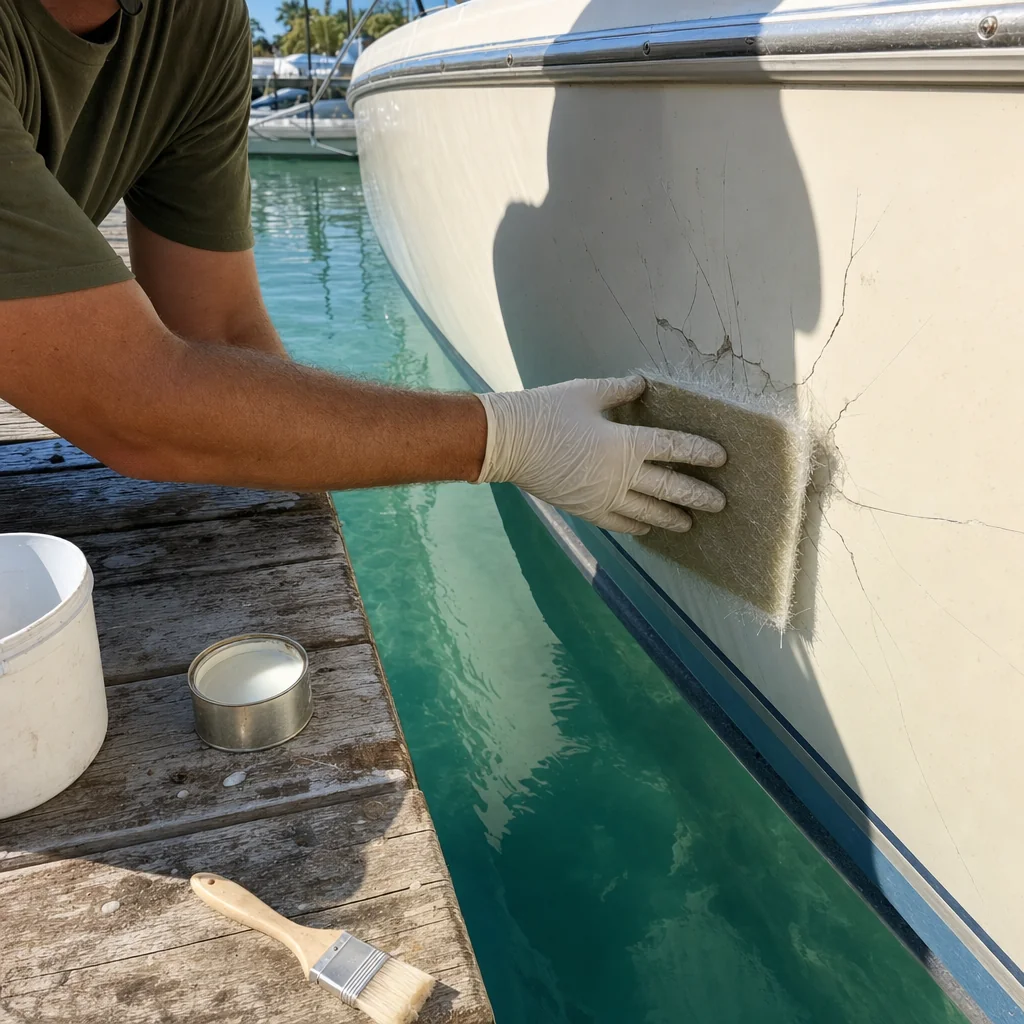
Gelcoat repair restores the hard outer shell of your fiberglass hull after scratches, cracks, crazing, or impact damage expose the laminate beneath. In Key West's saltwater environment, even small surface breaks invite moisture intrusion that can turn a cosmetic fix into a structural problem if left alone. A mobile technician can match your boat's original color, fill the damage, and bring the finish back to a smooth, waterproof surface without hauling the vessel out of the water. Learn more about Fiberglass Repair.
What Gelcoat Damage Actually Looks Like
Gelcoat is the pigmented polyester resin layer that gives a fiberglass boat its color and protects the laminate underneath. Damage shows up in several ways: hairline stress cracks that fan out from a point of impact, deep gouges from dock strikes or trailer rash, widespread crazing that looks like a dried mud pattern, and oxidation that leaves the surface chalky and faded. In Key West, UV intensity and constant salt exposure accelerate all of these conditions, so a boat that looks fine in the spring can show significant surface breakdown by fall. Catching damage early keeps the repair small and the cost manageable.
How the Repair Process Works
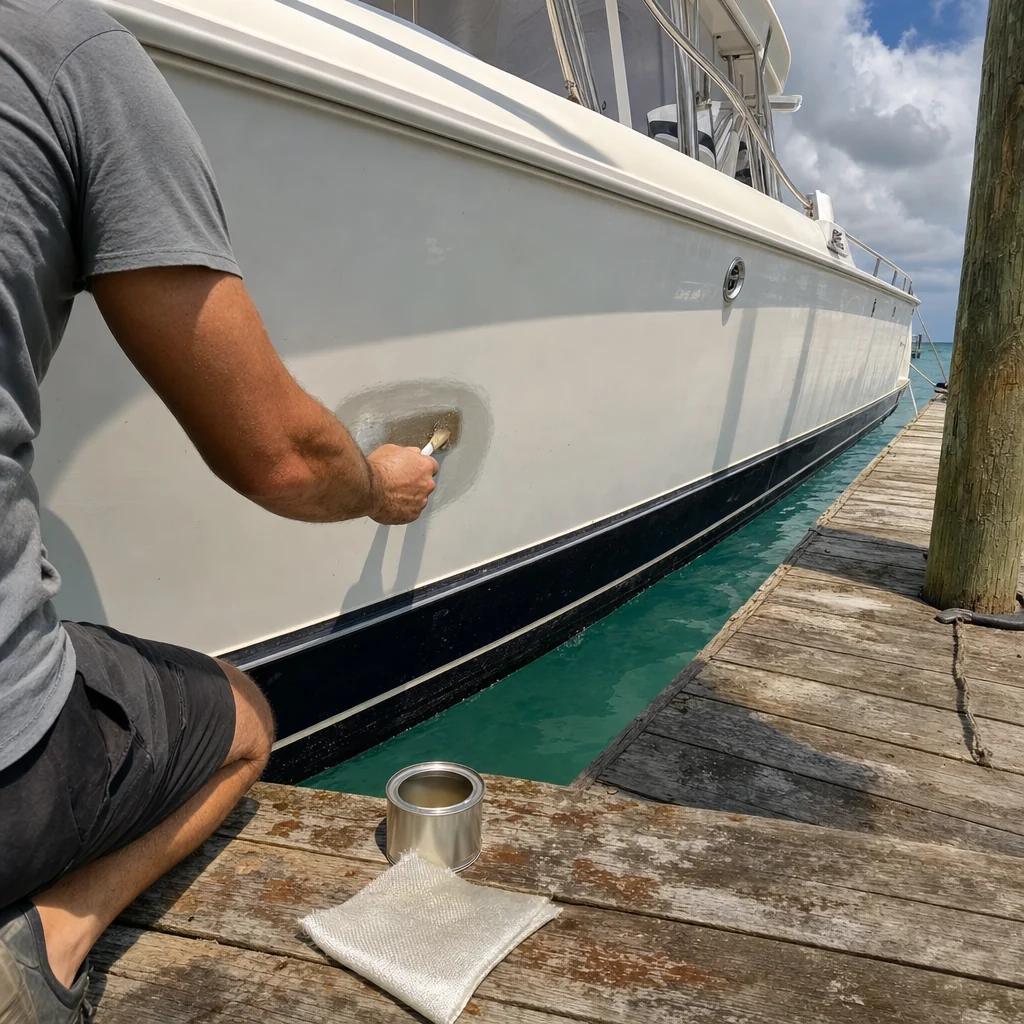
The first step is cleaning and drying the damaged area thoroughly, because any moisture or contamination trapped under new gelcoat will cause adhesion failure. The technician then grinds or routes out the damaged material to create clean edges, which gives the repair compound a solid surface to bond to rather than just sitting on top of crumbling or delaminated gelcoat.
Color matching is the most skilled part of the job. Gelcoat fades over time, so the repair mix is tinted and tested against the surrounding surface before application. Once the color is dialed in, the gelcoat is applied in layers, allowed to cure, then block-sanded through progressively finer grits and polished to blend with the surrounding finish. A well-executed repair is essentially invisible and, more importantly, watertight.
- Surface prep and moisture check
- Grinding or routing to clean edges
- Color matching to aged hull finish
- Layered gelcoat application and cure
- Block sanding and polish to blend
Common Reasons Boats Need Gelcoat Work in Key West
Most gelcoat repairs in this area trace back to one of these six causes.
Dock and Piling Strikes:
Tidal surge and boat traffic in Key West marinas make contact with pilings routine. These impacts leave gouges and stress cracks that need to be filled before salt water works its way in.
UV Oxidation:
Intense South Florida sun breaks down the resin binders in gelcoat, leaving a chalky, porous surface. Oxidized areas no longer repel water the way sound gelcoat does.
Trailer Rash:
Loading and unloading on ramps scrapes the hull against bunks and rollers. The resulting scratches are shallow but numerous and benefit from a single repair session.
Stress Crazing:
Repeated flexing of the hull, especially on older boats, creates networks of fine cracks. Left alone, crazing allows moisture to reach the laminate and begin osmotic blistering.
Impact Chips:
Debris in the water, crab trap lines, and anchor chain contact all chip gelcoat. Even small chips expose raw fiberglass that will absorb water over time.
Previous Poor Repairs:
Mismatched color, shrinkage cracks, or repairs done without proper prep often need to be redone correctly. A fresh repair done right will outlast a quick patch by years.
Why Mobile Repair Makes Sense Here
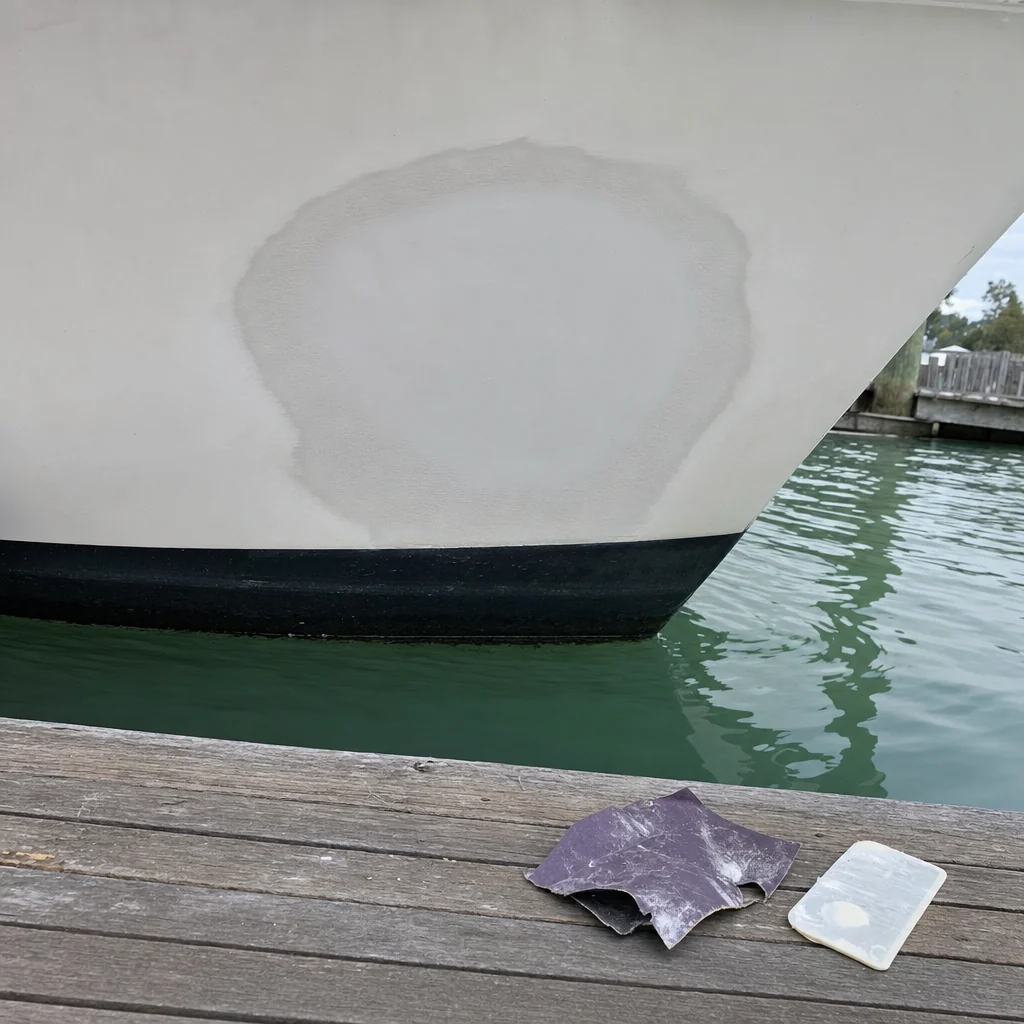
Hauling a boat out of the water in Key West means coordinating with a boatyard, paying lift fees, and losing time on the water. For gelcoat work that does not require the vessel to be dry-docked, a mobile technician comes to your slip, mooring field, or driveway and handles the repair on site. This keeps costs lower, eliminates the logistics of trailering, and gets your boat back in service faster. Because gelcoat repair is part of the broader fiberglass repair work we do throughout the Keys, the same technician who handles surface cosmetics can also assess whether any underlying laminate damage needs attention before it becomes a bigger job.
Related Guides
Next: hull repair
Frequently Asked Questions
How long does a gelcoat repair last?
A properly prepared and color-matched gelcoat repair can last ten years or more with routine waxing and UV protection. The longevity depends almost entirely on surface prep — repairs that skip the grinding and cleaning steps tend to crack or peel within a season. Keeping the repaired area waxed twice a year extends the life significantly in a high-UV environment like Key West.
Can you match the color on an older boat?
Yes, though it takes more effort than matching a new hull. Gelcoat fades and yellows over time, so the repair mix has to be tinted to match the aged surrounding surface rather than the original factory color. An experienced technician will test the blend in natural light before committing to the application, and a final polish of the surrounding area helps the repair integrate with the rest of the hull.
Is gelcoat repair the same as painting the hull?
No. Gelcoat is a pigmented resin that is part of the fiberglass structure, while paint sits on top of the surface. Gelcoat repairs restore the original protective layer and are generally preferred for above-waterline cosmetic damage on fiberglass boats. Paint is typically used when the gelcoat is too far gone to repair or when a full color change is desired.
How do I know if the damage is just cosmetic or something deeper?
Hairline cracks and surface scratches that do not flex when you press on them are usually cosmetic. If the hull feels soft or spongy around the damage, sounds hollow when tapped, or if you can see fibers through the crack, the laminate beneath may be compromised. A technician can probe the area during an assessment and let you know whether the job is a surface repair or requires fiberglass laminate work as well.
Do I need to take the boat out of the water for this repair?
For above-waterline damage, the boat can stay in the slip in most cases. The repair area needs to be dry, so the technician will clean and dry it before starting. Work at or below the waterline does require the hull to be out of the water, but most dock strikes and surface crazing happen on topsides and can be handled without hauling.
How does gelcoat repair connect to fiberglass repair?
Gelcoat is the outermost layer of a fiberglass hull, so gelcoat repair is often the first step in a broader fiberglass repair job. If the damage has reached the laminate layers beneath, the structural fiberglass needs to be rebuilt before the gelcoat surface can be restored. You can learn more about the full range of fiberglass repair services we offer at our fiberglass boat repair page.